


September 27, 2026 / Dentistry
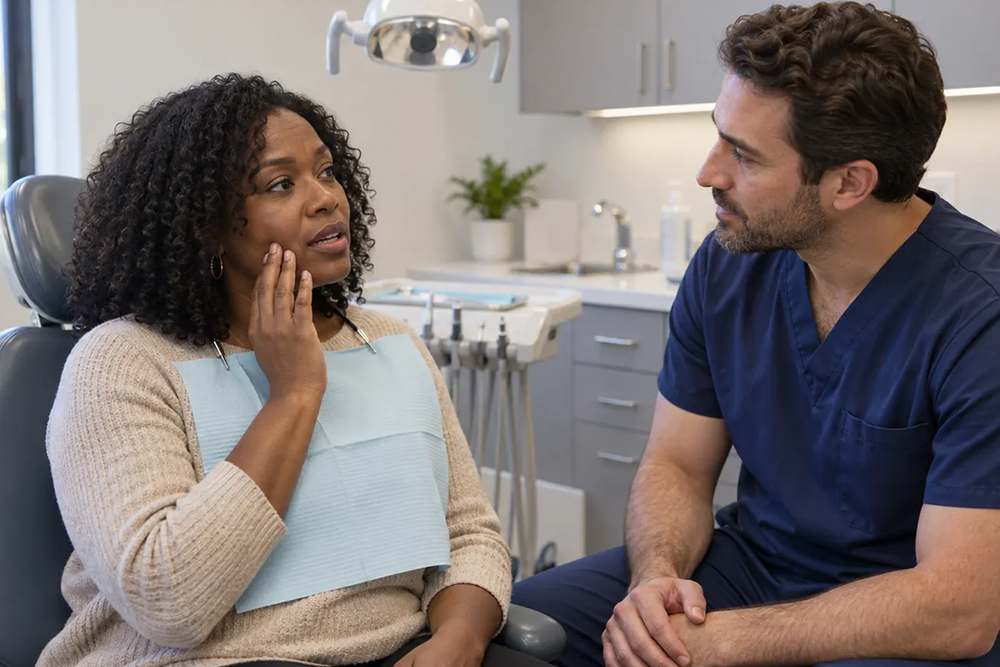
If a crown or filling breaks, comes loose, or falls out, try to protect the tooth and contact a dental office for guidance. The tooth may not hurt right away, but exposed or damaged tooth structure can become sensitive, sharp, or more vulnerable to further damage. If you have severe pain, swelling, trauma, bleeding that will not settle, or a sharp edge cutting your mouth, contact an emergency dentist in Cambridge sooner.
A broken crown or filling should be assessed promptly. Seek faster care if there is severe pain, swelling, trauma, bleeding, or visible damage to the tooth.
King Street Dentistry serves patients in Cambridge and the Preston community, including patients who need guidance for urgent dental concerns. If you are unsure whether your broken restoration needs immediate attention, the safest next step is to contact the dental office and explain what happened.
Start by protecting the area and avoiding anything that could make the tooth worse. A broken filling or crown can leave rough edges, exposed dentin, or space where food and bacteria can collect.
Until a dentist can assess the tooth, these steps are usually sensible:
Do not assume the crown can be reused or that the filling can simply be patched. Sometimes the restoration is the only issue. Other times, the tooth underneath has decay, a crack, a bite problem, or another concern that needs attention first.
If the problem is not severe but the tooth feels exposed or uncomfortable, you can request a dental appointment and explain that a crown or filling has broken. If symptoms are more urgent, call the office instead of waiting for an online form response.
A broken crown or filling is more urgent when there are signs of pain, infection, trauma, or further tooth damage. A small chip in a filling with no discomfort may be less urgent than a lost crown on a painful tooth, but both should be checked.
A broken restoration becomes more urgent when pain, swelling, trauma, uncontrolled bleeding, or sharp broken tooth structure is involved.
Contact an emergency dentist in Cambridge promptly if you notice:
The Canadian Dental Association notes that broken teeth often need prompt dental attention and that larger breaks may require different treatment than smaller ones. The Ontario Dental Association also recommends contacting a dentist after a dental emergency to improve the chance of protecting the tooth and preventing further damage.
If swelling affects breathing or swallowing, or bleeding will not stop, seek urgent medical care. A dental blog can offer general guidance, but symptoms like those need immediate assessment.
Avoid permanent DIY fixes. A broken crown or filling may look like a simple mechanical problem, but the tooth underneath needs to be examined before anyone knows what repair is appropriate.
Before your visit, avoid:
Pharmacies may sell temporary dental materials, but those are not a permanent repair. If you use any over-the-counter product, follow the package directions and still arrange a dental assessment. Do not use temporary material if it causes pain, changes your bite, or makes the area feel worse.
Do not use household glue or try to permanently repair a crown or filling at home. The tooth needs a dental assessment before the right repair can be chosen.
A crown or filling protects tooth structure that may already be weakened, repaired, or previously affected by decay. When part of that restoration breaks or comes out, the tooth can lose some of that protection.
Sensitivity can happen when dentin is exposed. Dentin is the layer under the enamel that has tiny pathways leading toward the inside of the tooth. Cold air, cold drinks, sweets, or pressure from biting can feel sharper when dentin is exposed.
Pain can also come from a crack, a high or uneven bite, decay under the old restoration, irritated gum tissue, or inflammation inside the tooth. Sometimes the problem feels mild at first and becomes more noticeable after chewing, temperature changes, or food getting trapped around the tooth.
That is why a broken filling or crown should not be judged only by how it feels in the first hour. No pain is better than severe pain, of course, but no pain does not always mean the tooth is safe to leave alone.
An emergency dentist will usually focus first on what happened, how the tooth feels, and whether the tooth is stable. The goal is to understand the tooth, the restoration, and the surrounding gum tissue before recommending next steps.
Depending on the situation, the dentist may assess:
The right treatment depends on the condition of the tooth. For example, a small broken filling may need a different repair than a crown that came off because decay changed the shape of the tooth underneath. A dentist may also recommend stabilizing the tooth first and planning a more permanent repair after the immediate concern is addressed.
This is also where details matter. Bring the crown if it came off. Tell the dental team when the issue happened, whether the tooth was painful before the crown or filling broke, and whether you noticed a crack, swelling, bad taste, or pain when biting.
You should not permanently put a crown back on yourself. Save the crown and bring it to your dentist so the tooth and crown can be checked. If the crown is loose, damaged, or no longer fits, forcing it back on may irritate the tooth or affect your bite.
A lost filling should still be assessed, even if the tooth does not hurt. The opening left behind can collect food and may expose tooth structure. Try to avoid chewing on that side and arrange a dental visit before the tooth becomes more sensitive or damaged.
You can usually eat carefully if you avoid chewing on the affected side and choose soft foods, but the safest choice depends on how damaged or sensitive the tooth feels. Avoid sticky, crunchy, hard, hot, or cold foods around the broken restoration. If biting hurts, stop chewing on that side and call for guidance.
Yes, keep the crown if you can find it. Place it in a small bag or container and bring it to your appointment. The dentist can check whether it is damaged, whether it still fits, and whether the tooth underneath can support it.
You should contact a dentist as soon as you can after a crown or filling breaks. Faster care is especially important if you have severe pain, swelling, trauma, bleeding, a sharp edge, or visible tooth damage. If symptoms are mild, the office can help guide the timing for assessment.
A broken crown or filling can feel stressful, but you do not have to figure out the next step alone. King Street Dentistry can help patients in Cambridge and Preston understand whether a broken restoration needs prompt emergency care or a scheduled assessment.
If you have pain, swelling, trauma, bleeding, or a sharp broken area, contact King Street Dentistry for guidance. For non-life-threatening concerns, you can also request a dental appointment online.
You can call King Street Dentistry at 519-219-6363 or use the contact page to reach the Cambridge office. The dental team can advise you on the next appropriate step based on your symptoms and the condition of the tooth.

Your neighbourhood dental clinic
serving the Cambridge and Preston
community — King Street Dentistry, where
your oral health is our top priority!
1515 King Street East, Suite 109
Cambridge, ON, N3H 3R6
519-219-6363
519-219-0051
info@kingstreetdentistry.ca


